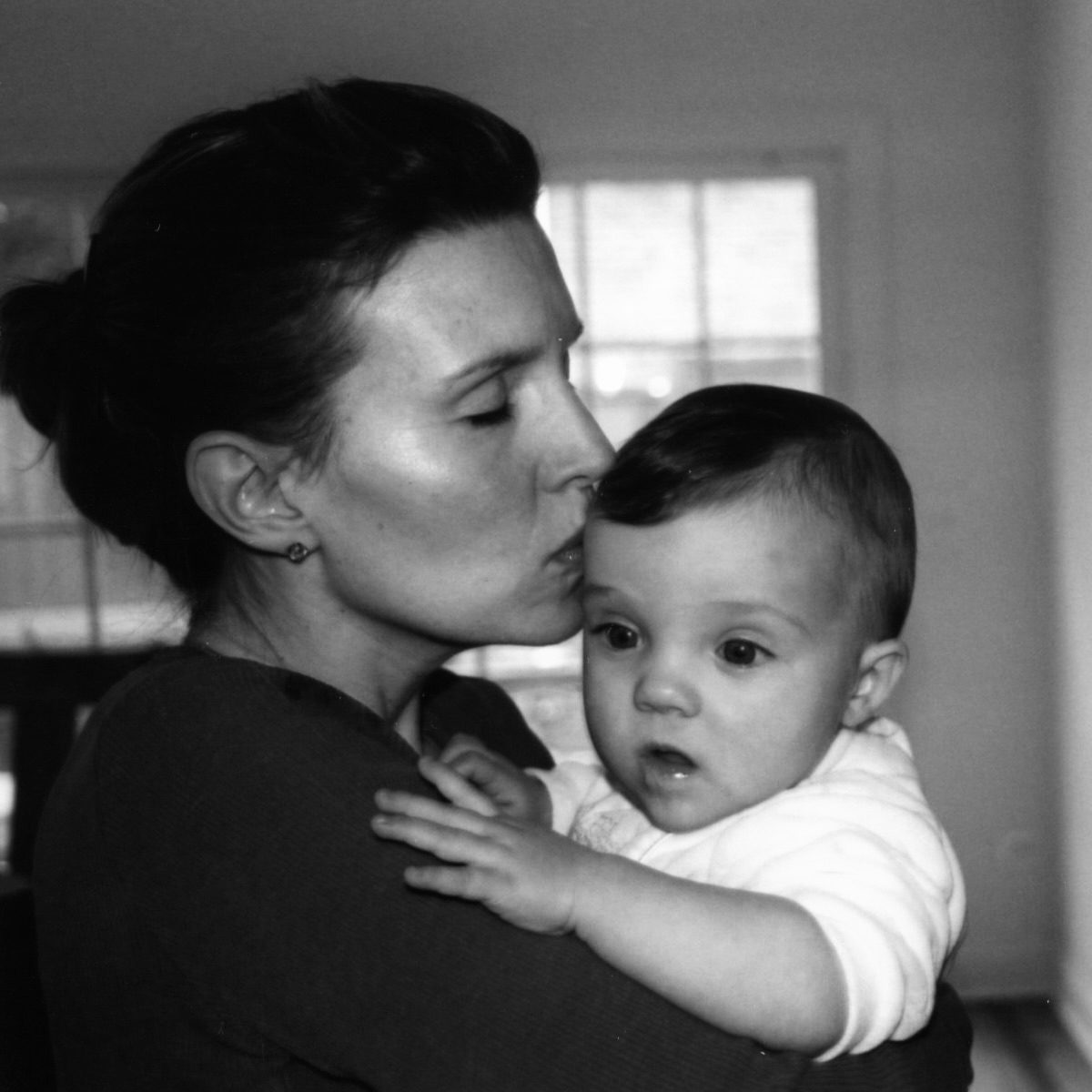

I always loved running errands with my mom. I think it was because I really just loved being around her and having one-on-one time. My mom was so good at that- finding little ways to make me and each of my siblings feel special and seen. I’m not sure why this particular moment sticks out for me all these years later, but I have this early memory of us in our Honda Odyssey on a bright summer day when I was about seven. The exact details are a little fuzzy, but we are getting back into the car after she had dropped something off at the bank in the downtown area of our suburb. I don’t remember what prompted her to say this, but she looked at me, one leg in the car and the other on the pavement balancing her purse on her knee as she dug through looking for something. She was so good at practically everything, but her purse was always a jumbled mess of receipts, random kids toys, bandaids for scraped knees, and her biggest love besides her family: makeup. She said, “One day you’re going to be a teenager and running errands with mom will not sound as fun anymore” and smiled at me in the rearview mirror as I laughed and promised her that would never be true.
As moms tend to be, she was right. Well, partially right. High school rolled around and my priorities shifted to my friends and schoolwork. Our errand runs changed to late night Bachelor and Married At First Sight binges while I did my homework at the kitchen table. One thing remained the same though- my mom was still my best friend through and through. It wasn’t until my junior year of high school where it felt like there was a shift between us. My incredibly gentle, kind, and patient mom started to have mood swings and somewhat erratic emotional responses to otherwise regular occurrences. Initially, we rationalized this as intense menopause symptoms and she began scheduling appointments with her primary care doctor. We’d soon realize that these appointments treated only the symptoms, often bandaged up with an increase in her Lexapro prescription. After all, my mom had been on Lexapro practically my whole life (although I never knew this until I was much older). She had experienced post-partem depression after the births of my sister and I, and Lexapro helped her to feel better. As my mom’s Lexapro prescription kept increasing, so did our concerns. What began as mood swings here and there had snowballed into matted hair, wrong turns on the route home, and piles of clutter building up around our typically tidy house.
My dad eventually went to one of my mom’s appointments to help advocate for more answers. We knew something was not right. The Lexapro wasn’t solving anything and the dosage being prescribed was alarmingly high. After my parents laid everything on the table, my mom’s general care doctor finally seemed to recognize that this was more than a bad bout of menopause. This appointment began what would be a long, frustrating, and confusing process of referrals to neurologists.
Somewhere in the midst of this, we took a family trip to Punta Cana for New Year’s. I was now a homesick freshman at Indiana University and was thrilled to be home for the holidays. I remember driving back the second my last final exam was submitted, anxious to get home and spend time with my family. I pulled into our driveway sometime in the afternoon, expecting to burst through the front door and give my mom a hug. Except when I walked in and threw my bags down, the house was quiet but looked like chaos. Our usually tidy home was a mess. I looked in the kitchen first and the faucet was running which felt odd because I was slowly gathering that nobody was home. When I walked over to turn it off, I noticed that day’s newspaper just laying there in the sink with the water running over it, now turned it into a soggy mess. Even now years later, there’s something about the image of that particular scene that is so vivid in my memory. The tears came immediately. In some ways, I look back and wonder if I knew then. Maybe not exactly of what was to come, but I knew our lives were about to change.
The holidays came and went and we pressed pause on my mom’s appointments to enjoy our *rare* family vacation. We always had the best time just being together, no matter if we were in our living room back home or on a beach in Punta Cana. There are these moments that just stick out clear as day in my brain from the past six years and this was one of them. It was one of our last dinners before heading home and I was sitting across the table from my mom, my dad seated next to her. I watched her lift her fork to take a bite of her meal except she was holding the fork backwards, with the tines in her palm. My dad gently took the fork from her and repositioned it in her hand as my siblings and I watched out of the corner of our eyes, being careful not to make her feel uncomfortable or embarrassed. She was understandably flustered, with my dad saying, “It’s alright. We are going to figure this out when we get home”.
My mom was diagnosed with Early-Onset Alzheimer’s in September 2020. She was 56 years old. We don’t have a family history, I didn’t know anyone with the disease, and I definitely didn’t know what Alzheimer’s even was. Wasn’t Alzheimer’s an old person’s disease? How could my beautiful, loving, busy, compassionate, 56 year old mom have Alzheimer’s? I can’t remember exactly why I was home from school, but I was sitting at my desk in my bedroom at home when I heard my parents get back from the appointment with the 3rd neurologist. I heard the familiar slam of the garage door followed by a noise I didn’t immediately recognize. It was my mom’s sobs coming from our kitchen. And I knew. I didn’t need anybody to tell me. I don’t even remember anyone actually telling me that it was, in fact, Early-Onset Alzheimer’s. I don’t remember much of the months that followed. I cried in my new room at the sorority house a lot and spiraled over the unknown during phone calls to my friends from home. I quickly learned to stop doing my own research, eventually not even being able to Google “Early-Onset Alzheimer’s” without breaking down. I went home basically every other weekend, the guilt of being away was constant whenever I was back at school. My life felt as though a flip had been switched and there was a clear “before” and now we were in the “after”. Life was completely different and completely out of control but more so, so was hers.
I can admit now that college was not my best years. I had so much fun, but I spent a majority of it bouncing between the guilt, the loneliness that comes with anticipatory grief, and feeling like I wasn’t relating to my friends. I was far from the best version of myself and my brain felt like it was constantly in fight or flight mode. It was not that I didn’t have support, because I did, but there was nothing anybody could say or do that would change reality. My reality was that I wanted to hit fast forward to graduate and spend more time with my mom. Eventually that time came and I moved home, found a dream job, and helped my dad take care of my mom. For the first couple of months, my dad and I were both working full time while also being caregivers for my mom who now required full time care. It was hard, but this year will always be the most precious to me- I got to take care of my mom after she had spent her whole adult life taking care of me.
Eventually we got support through the form of our amazing caregivers. We were lucky enough to be able to keep my mom at home and were blessed with the gift of capable and compassionate caregivers. This was a huge, terrifying step for all of us, and required a lot of adjusting for my mom. At the core, our #1 priority was and still is protecting my mom’s dignity. We didn’t do a perfect job by any means, but I’d like to think we were fierce. We did as much as we could with her while we could, oftentimes saying that “every day is going to be the best day”. When you’re up close, the day to day changes become less and less significant. They start to blur together. I explain this to people using stairs- my mom’s symptom manifested as a series of sudden drops followed by plateaus and sometimes even steps forward versus a smooth decline. My brain conditioned itself to receive and package up these feelings in a sort of routine assembly line- her symptoms would get worse, we would handle it, and then things would level out and remain steady for a while. Realistically, I knew that Early-Onset Alzheimer’s is a terminal disease, but my brain protected me from acknowledging the reality of that.
That’s why when her neurologist recommended a hospice consultation in October 2024, I lost it. I was in shock. I felt like the world was caving in and sometimes it felt like my chest physically hurt. This will sound dramatic and it was, but I truly believed I would need to be hospitalized and sedated when this time came. There was no version of myself that could get through losing my mom. I had only experienced hospice through the lens of losing my grandparents, in which case their hospice care was just days long. I look back on the first hospice consultation with the perspective that we just didn’t know what we didn’t know. This was new to all of us. I didn’t realize that a hospice consultation is exactly that- a consultation. And eventually we fell back into our old routine, my mom would get a little more sick, but we always handled it and things steadied out. The hospice team had recommended palliative care, which really just gave us the extra support we needed to make sure my mom was getting the highest level of care possible. In reality though, she was getting weaker and weaker. When she began pocketing, and on rare occasions, choking on food, we made the decision to begin full hospice treatment on January 2nd, 2026. My brain still struggles going back to that time. When her hospice bed was delivered, the equipment tech wasn’t even halfway through the door with it when I felt the panic rising in my chest and tears falling. There were a million thoughts and feelings all at once but for some reason, I focused on this bed. And why did it have to be such an ugly shade of brown?
After fighting to stay with us for almost six years, my mom passed away on January 17th, 2026. To be completely honest, I write this two months later and the last two weeks of her life are still too hard to write about. Maybe I’ll feel different some day. For now, I feel proud of myself for writing this, for still trying my best to move forward in life, however foreign it feels. I’m finding that writing about my mom’s story has helped me to organize my thoughts amidst the grieving process (emphasis on the *process*). My goal in starting this blog is to share my experiences as a young person navigating a parent’s Early-Onset Alzheimer’s diagnosis and hoping it is relatable to some. When my mom was first diagnosed, I could feel myself spiraling over the unknown. I scoured every corner of the internet to find content from others in my position that I could seek comfort in. What I quickly realized is that while there are thousands of resources out there about Alzheimer’s and other dementia related diseases, there were very few on Early-Onset and even fewer that were presented through a relatable lens. If I can help provide some small form of momentary comfort to someone else in my position, then it feels like the grief that I’m feeling has a purpose.

Leave a Reply